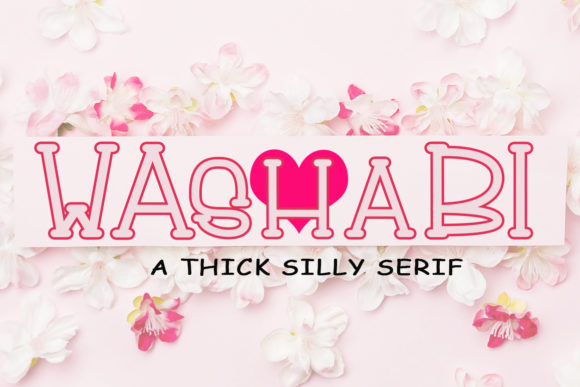
Washabi: A Serif Font for Polished Branding
As a small business owner, I’ve learned that the right font can make all the difference in how a brand is perceived. Whether it’s a bakery box, a skincare label, or a café menu, typography plays a key role in shaping first impressions. That’s why I was excited to try Washabi, a unique and versatile serif font that brings a touch of elegance and clarity to any project.
What Is Washabi?
Washabi is more than just a typeface—it’s a tool for creating visual consistency across a brand’s identity. With its clean lines and subtle curves, it balances sophistication with approachability. It has a modern yet timeless feel, making it ideal for businesses that want to appear professional without sacrificing warmth. The font’s versatility allows it to shine in both digital and print formats, from website banners to product packaging.
One of the things I love about Washabi is its personality. It feels like a friendly but confident voice, perfect for brands that want to stand out while maintaining a sense of reliability. Whether used for headlines or short phrases, it adds a refined touch that elevates the overall look of any design.
Real-World Applications
I recently worked with a local bakery looking to refresh their packaging. Their old labels felt generic, and they wanted something that would make their products more memorable on the shelf. We chose Washabi for the main text on their boxes and tags. The result was a cohesive, polished look that felt both inviting and professional. Customers immediately noticed the difference—there was a subtle but clear shift in how their brand was perceived.
Another project involved a candle seller who needed new labels for their jars. They wanted something that felt natural and elegant, without being too formal. Washabi fit perfectly. Its soft curves gave the labels a handmade feel, while the structure kept everything looking neat and organized. It also paired well with a simple sans serif for subtext, creating a balanced and visually appealing design.
For a café updating their menu, we used Washabi for the headings and section titles. It added a level of sophistication that matched the ambiance of the space. The font’s readability made it easy to scan through the menu, which is essential for a busy lunch rush. It also helped reinforce the café’s brand identity, making the entire experience more consistent for customers.
When to Use Washabi
Washabi excels as a display font. It’s best suited for headlines, logos, and short phrases where visual impact matters. It works especially well on product labels, packaging titles, and social media graphics. Its clean structure ensures it remains legible even at smaller sizes, making it a great choice for business cards, stickers, and thank-you notes.
However, it’s not the best option for long blocks of text. For body copy, a simpler sans serif or script font might be more appropriate. That said, when used strategically, Washabi can add a decorative accent that draws attention without overwhelming the design.
Typography Tips for Small Businesses
When working with fonts, consistency is key. Using a single typeface across all materials helps build brand recognition. But don’t be afraid to mix styles for contrast. Pairing Washabi with a clean sans serif, like Helvetica or Roboto, creates a modern and balanced look. For a more luxurious feel, pairing it with an elegant serif like Georgia or Playfair Display can add depth and character.
Readability should always come first. Even the most beautiful font won’t work if it’s hard to read. Test Washabi on different surfaces—printed packaging, mobile screens, and social media thumbnails—to ensure it looks good in all contexts. If you’re using it for small labels, consider adjusting the spacing slightly for better clarity.
Font Pairing Ideas
One of the strengths of Washabi is how well it pairs with other fonts. For a minimalist look, pair it with a simple sans serif. For a more creative vibe, combine it with a script or handwritten font. If you’re going for a modern aesthetic, try pairing it with a geometric sans serif like Futura or Montserrat.
It’s also worth checking what styles and file formats are included with the font. Some fonts come with multiple weights, ligatures, and alternate characters that can enhance your designs. Make sure to review the licensing terms before using it for commercial projects, such as product packaging or client work.
Ultimately, Washabi is a powerful addition to any designer’s toolkit. It offers a blend of style and functionality that can elevate a brand’s visual presence. Whether you’re updating a menu, designing a logo, or creating social media graphics, this font has the potential to make your work stand out in a crowded market.
As a small business owner, I know how important it is to create a strong, memorable brand. Washabi isn’t just a font—it’s a way to express creativity with confidence. And in a world where first impressions matter, that’s something worth investing in.